

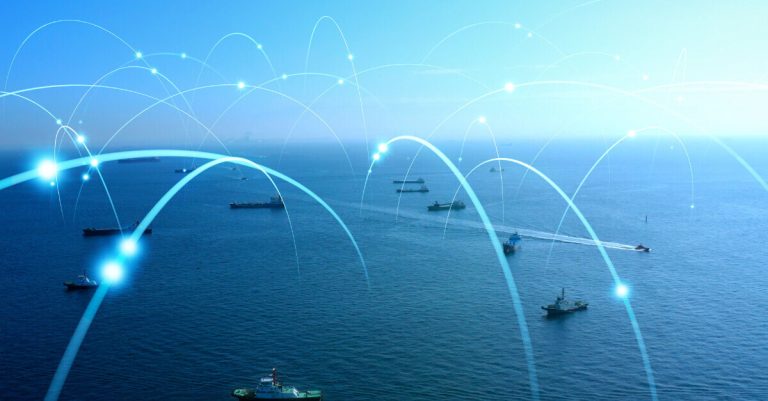
Global trade, national security, and environmental protection all depend on what happens at sea — often in ways that remain invisible to those on land. With more than 80% of international trade transported by maritime routes, governments and commercial maritime organizations require continuous visibility into where vessels are operating, what they are carrying, and whether those activities pose operational, financial, or security risks. This is where maritime intelligence plays a central role.
Maritime intelligence refers to the collection, analysis, and interpretation of data related to vessel movements and maritime activity worldwide. By combining information from vessel tracking systems, satellite imagery, weather networks, port infrastructure, and other maritime sources, organizations can turn large volumes of raw maritime data into actionable insight that helps support safer navigation, lawful trade, and efficient shipping operations.
In practical terms, maritime intelligence helps navies, coast guards, shipping companies, port authorities, insurers, commodity traders, and regulators understand what is happening at sea, why it is happening, and what risks may emerge next. These insights allow organizations to:
- Reroute vessels around congestion or severe weather
- Identify ships attempting to conceal their identity or cargo
- Verify compliance with sanctions and environmental regulations
- Prevent costly delays, accidents, or legal exposure
Types of maritime intelligence
Maritime intelligence is a collection of analytical functions that provide visibility across navigation, operations, security, and environmental performance. Together, these capabilities demonstrate how maritime data translates into real-world decisions made by operators, analysts, and authorities at sea.
Navigational Intelligence supports the safe movement of vessels, including container ships, oil tankers, bulk carriers, fishing vessels, and passenger ships. It analyzes factors including:
- Vessel traffic density in busy shipping lanes
- Severe weather systems and sea-state conditions
- Underwater hazards or restricted zones
- Port congestion and berth availability (designated docking space at a port)
For example, navigational intelligence may recommend rerouting a container vessel around a developing storm system or adjusting arrival speed to avoid waiting offshore at congested ports. This reduces collision risk, fuel waste, and scheduling delays.
Port Operational Intelligence focuses on how efficiently vessels and fleets perform throughout a voyage. Shipping companies and fleet operators use it to monitor:
- Fuel consumption and engine performance
- Voyage timing and schedule adherence
- Cargo handling efficiency
- Emissions output under environmental regulations
In practice, maritime intelligence helps port technology identify vessels consuming excess fuel due to inefficient routing or adjust sailing speed to align with port availability. This can help reduce idle time, fuel costs, and demurrage charges, which are fees incurred when cargo or vessels remain in port longer than scheduled, while improving overall supply chain reliability.
Security Intelligence protects vessels, cargo, and maritime infrastructure from criminal or geopolitical threats. Behavioural analytics can identify warning signs such as:
- Vessels disabling AIS tracking systems
- Unexplained route deviations
- Prolonged loitering near offshore infrastructure
- Suspicious ship-to-ship transfers at sea
- Repeated entry into sanctioned or restricted waters
These patterns may indicate piracy preparation, sanctions evasion, illegal fishing, or smuggling activity. Early detection allows authorities, insurers, and operators to intervene before incidents escalate.
Environmental Intelligence focuses on monitoring and minimizing the ecological impact of maritime activity, while ensuring regulatory compliance. Applications include:
- Detecting oil spills, illegal dumping, or other pollution events
- Monitoring vessel activity in marine protected areas
- Tracking fleet emissions under decarbonization regulations
- Assessing climate-driven risks such as extreme storms or shifting ice conditions
Emerging Intelligence Areas: As maritime analytics mature, intelligence applications continue to develop and extend beyond vessel operations. Examples include:
- Financial and trade intelligence: analyzing shipping activity to anticipate shifts in commodity supply, such as fluctuations in oil exports or grain availability.
- Insurance risk intelligence: assessing voyage risk exposure based on route history, vessel behaviour, or geopolitical instability.
- Geopolitical intelligence: monitoring key shipping routes and regions affected by political instability or conflict that may disrupt global trade.
- Maritime domain awareness (MDA): creating a real-time operational picture of all vessel activity, movements, and risk indicators within a maritime region to support national security monitoring and maritime law enforcement planning.
Who relies on maritime intelligence — and how?
Maritime intelligence enables coordinated decision-making across governments, commercial operators, environmental organizations, and global financial systems. Each group relies on intelligence to manage distinct maritime risks.
Government and Defence Organizations – Navies, coast guards, and maritime authorities rely on maritime intelligence to maintain national security and maritime domain awareness. Intelligence systems combine satellite monitoring, AIS vessel tracking, and radar surveillance to monitor territorial waters, detect unauthorized or unidentified vessels, support search-and-rescue operations, and combat illegal, unreported, and unregulated fishing.
Government agencies also use maritime intelligence to enforce sanctions, monitor strategic shipping corridors, and identify illicit maritime networks, including coordinated vessel ownership or trading structures used to conceal smuggling or illegal trade activity.
Commercial Maritime Industry – Shipowners, logistics providers, and port operators use maritime intelligence to improve operational efficiency and supply chain resilience. Real-time visibility into vessel movements, estimated arrival times, and port congestion levels allows organizations to anticipate bottlenecks, adjust sailing speeds to match berth availability, reroute vessels around disruptions such as weather or conflict zones, and minimize costly delays.
This intelligence enables companies to protect delivery schedules while reducing fuel consumption and operational risk.
Fisheries and Environmental Organizations – Environmental agencies and fisheries management organizations use maritime intelligence to monitor marine ecosystems and enforce sustainable fishing practices.
Satellite tracking and behavioural analysis help identify vessels operating inside marine protected areas, detect illegal or unlicensed fishing activity, and monitor compliance with national exclusive economic zones.
These insights support marine conservation planning, protect vulnerable fish stocks, and help governments prevent resource depletion that threatens food security and coastal economies.
Financial, Insurance, and Compliance Sectors – Financial institutions, insurers, and commodity traders increasingly rely on maritime intelligence to assess economic trends and manage risk exposure.
Maritime shipping patterns often provide one of the earliest visible signs that global trade conditions are shifting. Analysts monitor signals such as port congestion, shifts in trade routes, changes in freight rates, and increased deployment of specialized vessels to identify emerging disruptions or structural changes in global supply chains and commodity markets.
Maritime intelligence also helps institutions verify vessel ownership structures, cargo origin, and trading patterns, reducing exposure to fraud, sanctions violations, and money-laundering risk.
Maritime data sources for intelligence
Maritime intelligence combines multiple datasets to create a complete operational picture. These data sources form the foundation for continuous monitoring and analysis across global maritime activity.
- Automatic Identification System (AIS): provides information about vessel identity, location, speed, and course. This enables continuous monitoring of ship movements across global waterways.
- Satellite Imagery and Radar Technology: allows analysts to observe maritime activity beyond traditional monitoring coverage. These tools can identify vessels operating without tracking signals and detect activity in remote or high-risk regions.
- Weather and Oceanographic Data: provides insight into meteorological and ocean conditions, including storms, sea state, currents, and wave patterns, enabling operators to evaluate environmental risk and adjust routes accordingly.
- Port and Logistics Data: information related to port schedules, congestion levels, cargo handling, and infrastructure capacity supports more efficient docking, loading, and supply chain coordination.
- Regulatory and Ownership Databases: provide information on vessel registration, ownership structures, sanctions listings, and compliance histories, helping analysts verify legitimacy and assess operational or financial risk.
Technologies powering maritime intelligence
Turning maritime data into usable intelligence requires advanced analytical systems capable of processing vast, continuously updated datasets from satellites, vessel tracking networks, environmental sensors, and port systems. Together, these support maritime situational awareness, risk detection, voyage optimization, and regulatory monitoring across global shipping networks.
Artificial Intelligence (AI) and Machine Learning
Artificial intelligence enables maritime intelligence systems to process massive datasets, recognize patterns, and identify operational or security risks across global shipping activity.
By analyzing vessel movements alongside weather conditions, traffic density, fuel consumption, and geopolitical risk indicators simultaneously, AI can translate complex maritime data into predictive operational guidance.
AI-driven models can forecast port congestion, recommend fuel-efficient routing based on ocean and weather conditions, and identify operational inefficiencies such as excessive speed variation or prolonged waiting time outside ports. These capabilities help operators optimize voyage planning, reduce fuel consumption, and minimize delays across increasingly complex supply chains.
AI-enabled automation also helps reduce human error by generating real-time alerts related to nearby vessel traffic, hazardous weather, machinery anomalies, or emerging compliance risks. Rather than replacing human decision-making, intelligent systems help crews and operators respond more quickly and with greater confidence in complex, rapidly changing maritime environments.
Behavioural Analytics
Behavioural analytics examines historical and real-time vessel movement patterns to identify anomalies that deviate from expected maritime behaviour. Indicators such as unexplained route deviations, prolonged loitering, irregular speed patterns, or inconsistent identification signals often prompt further investigation, as they may reflect illicit activity or attempts to conceal vessel identity or intent.
Data Fusion and Analytics Platforms
Data fusion refers to combining multiple maritime data sources, including AIS signals, satellite imagery, port activity data, and environmental intelligence, into a unified monitoring platform, often displayed through operational dashboards or maritime domain awareness systems.
Port authorities, fleet managers, insurers, and security analysts can then monitor vessel risk profiles, regional traffic patterns, and operational conditions through a single integrated interface rather than disconnected datasets.
Automation and Predictive Modelling
Predictive modelling tools use historical voyage data, real-time vessel behaviour, weather forecasting, and geopolitical indicators to anticipate operational risks before they occur. For example, systems can forecast congestion several days in advance, flag routes with elevated piracy risk, or recommend speed adjustments to meet port arrival windows efficiently.
Automation also supports predictive maintenance by continuously monitoring onboard machinery performance, including vibration, temperature, and engine output, allowing operators to schedule repairs before equipment failure causes delays or safety incidents.
Benefits of maritime intelligence
When effectively implemented, maritime intelligence delivers measurable operational, financial, and security advantages, including:
- Improved safety: early warnings of collision risks, storms, or hazardous routes protect crews and vessels.
- Enhanced security: detection of suspicious vessel behaviour reduces exposure to piracy, smuggling, or sanctions violations.
- Regulatory compliance: monitoring ensures adherence to environmental, trade, and sanctions regulations.
- Reduced insurance risk: verified voyage data supports more accurate underwriting and risk assessment.
- Operational efficiency: optimized routing and speed management reduce fuel use and voyage delays.
- Supply chain visibility: real-time shipment tracking allows companies to anticipate delays and adjust logistics planning.
Collectively, these functions help organizations anticipate disruptions, assess exposure to operational or regulatory risks, and respond to changing maritime conditions before incidents impact safety, cost, or delivery timelines.
Role of a COP
While maritime intelligence turns raw data into insight, those insights must be accessible and actionable in real time. A Common Operating Picture (COP) provides this capability by bringing together data from AIS, radar, satellite imagery, port systems, and environmental sources into a single, shared view. This allows multiple stakeholders to see the same operational picture simultaneously and make aligned decisions.
A COP places insights in context, highlights risks, and supports coordinated action across teams. Operators gain a centralized, real-time understanding of what is happening and what matters most for more efficient, secure, and proactive maritime operations.
OCIANA and maritime intelligence
OCIANA turns maritime intelligence into coordinated, real-time action across defence, sovereignty, and the supply chain.
Strengthening Maritime Domain Awareness – OCIANA enhances Maritime Domain Awareness (MDA) by continuously analyzing vessel behaviour, routing patterns, environmental conditions, and geopolitical risk indicators. The system identifies anomalies such as AIS manipulation, dark-vessel activity, suspicious rendezvous patterns, sanctioned shipping networks, and corridor deviations — all indicators of grey-zone or hybrid maritime activity.
Through predictive analytics and continuously refined behavioural models, OCIANA helps shift operations from reactive monitoring to proactive risk management. Commanders and operators receive transparent, auditable decision-support insights that accelerate response while preserving human authority in complex operating environments.
Enabling Intelligence for Ports and Supply Chains – Beyond open-ocean monitoring, OCIANA extends maritime intelligence into port and supply chain operations where strategic and economic risks increasingly converge.
By integrating port logistics data with vessel intelligence and geopolitical indicators, OCIANA enables stakeholders to anticipate bottlenecks, adjust sailing speeds to align with berth windows, reduce emissions, and reroute vessels before delays escalate into supply chain disruption.
Contact us to learn how OCIANA uses maritime intelligence to protect sovereign waters, secure ports, and strengthen the resilience of global supply chains from origin to destination.

 English