
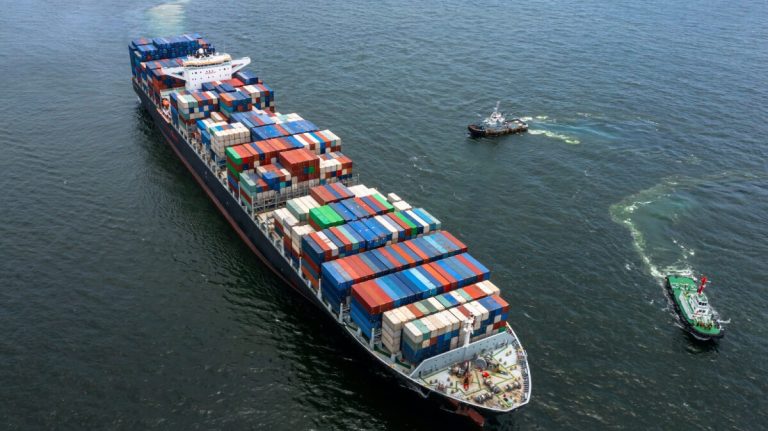
Berthing in shipping is a critical stage in maritime logistics. A berth, where cargo is transferred, helps set the pace for the entire supply chain. As shipping accounts for 80 to 90% of global freight, optimizing berthing directly supports faster turnaround times, increased port competitiveness, safer operations, lower costs for shippers and ship operators, reduced congestion, and lower emissions.
Recent research reinforces that berthing activities are also closely linked to marine environmental risk. A study published in Frontiers in Marine Science emphasizes that berth operations are also environmental and ecological hotspots. Improving scheduling precision, reducing waiting time at anchor, adopting shore-power systems, and implementing modern berthing aids can significantly lower noise, emissions, and habitat disturbance.
As ports plan for climate resilience and decarbonization, berthing efficiency is becoming a core strategy for balancing economic growth with environmental protection.
Key takeaways
- Berthing in shipping determines how quickly, safely, and efficiently vessels load and unload cargo.
- Effective berth operations reduce port congestion, emissions, and cargo delays.
- Berth types vary depending on vessel and cargo requirements.
- Safety, environmental protection, and global regulations shape berthing procedures.
- Optimizing berth usage improves supply chain performance.
- Modern ports rely on digital tools, AIS data, and berth scheduling to enhance efficiency.
What are the functions of a shipping berth?
A shipping berth serves as the operational backbone of maritime logistics, enabling safe, efficient cargo movement and vessel servicing. One of its primary functions is cargo handling.
Different berth designs support specific types of cargo equipment- including gantry cranes for containers, conveyor systems for dry bulk, and pipelines for liquid petroleum or chemicals. Aligning the berth’s infrastructure with the vessel type is essential for maximizing throughput.
Another critical function is docking and mooring. A berth provides the physical and structural systems, such as bollards, mooring hooks, fenders, and line-handling points, needed to safely secure the vessel. These systems ensure that ships remain stable during cargo operations and environmental changes such as wind, current, or tide.
Berths also support inspections, compliance checks, and documentation. Customs, immigration, port state control, and terminal operators use the berth as a regulated space to ensure cargo integrity, verify manifests, assess safety conditions, and enforce compliance with international and local regulations.
When the vessel cannot be unloaded immediately, the area around the berth can be used for temporary storage. Certain berths are also designed for passenger operations, offering safe walkways, terminals, and controlled access for cruise passengers or ferry travelers.
Factors that affect ship berthing times
Ship berthing time, the total duration a vessel remains alongside a berth, is a key metric of port efficiency. It directly affects vessel turnaround time, fuel consumption, emissions, and cargo movement across global supply chains.
Several factors influence berthing time, beginning with vessel characteristics such as length, draft, and cargo type. Larger vessels may require more maneuvering time or specialized equipment, extending their stay.
Port congestion is another major determinant. When berth availability is limited, vessels may wait at anchor, increasing fuel use and emissions. Efficient berth allocation systems help reduce this bottleneck, but ports with limited space or high traffic often face challenges.
Environmental conditions, including wind, tides, fog, and currents, also impact the berthing process. Some ports restrict movement during adverse conditions or require additional tug support to ensure safety.
Operational readiness, such as crane productivity, labour scheduling, equipment availability, and pre-planning, can significantly shorten or prolong a ship’s time at berth. Safety regulations for hazardous cargo may dictate slower or more controlled operations to reduce risk.
Different types of shipping berths
Ports use a variety of berth types to accommodate different vessel classes, cargo categories, and safety requirements. Here are examples of shipping berths and their general uses.
Quay berths located along solid quay walls and designed for functions like container, breakbulk, and general cargo operations. Equipped with cranes, handling gear, and adjacent storage yards, these berths are highly versatile.
Bulk cargo berths serve ships carrying grain, coal, minerals, ore, or petroleum. These berths rely on specialized equipment such as belt conveyors, bucket unloaders, pneumatic systems, or pipelines. Their design focuses on steady flow rates, controlled handling, and dust suppression.
Liquid cargo berths are specialized port facilities designed for loading and unloading bulk liquids such as crude oil, chemicals, and liquefied natural gas (LNG). They are equipped with pipelines, loading arms, and storage tanks to handle these products.
Tanker berths safely handle hazardous liquid cargo such as crude oil, refined products, chemicals and LNG. These berths often incorporate spill containment measures, specialized mooring patterns, and exclusion zones.
Passenger berths support ferry and cruise operations, providing controlled embarkation areas, terminal access, and safe movement for large volumes of travellers.
Dock berths provide basic mooring and access for smaller or general-purpose cargo vessels.
Ro-Ro (Roll-on/Roll-off) berths are dedicated to wheeled cargo that can be driven directly onto the boat via designated ramps.
Container berths are designed for the loading and unloading of containerized cargo. It is equipped with cranes and other essential infrastructure.
Berthing process and procedures
The berthing process involves a series of coordinated steps designed to ensure efficiency, safety, and compliance. It begins with pre-arrival notifications, where vessels provide estimated arrival times, cargo details, draft information, and any special requirements. Ports use this information to confirm berth assignments and ensure resources such as pilots, tugs, and terminal crews are available.
Next, if required, pilotage and tug assistance guide the vessel through the port’s navigation channel. Pilots provide local expertise regarding currents, tidal windows, and traffic conditions, while tugs provide maneuvering control for larger vessels or those operating near sensitive infrastructure.
Upon arrival at the berth, the vessel undergoes approach and mooring procedures. Mooring lines are secured to bollards or dolphins, fender positions are checked, the vessel completes required safety checks, and the ship’s officers verify stability conditions before cargo operations begin.
Once the vessel is securely moored and all safety checks are complete, cargo operations can commence. This includes connecting pipelines, positioning cranes, or deploying conveyors depending on cargo type. Terminal staff coordinate with the ship’s crew to manage loading, unloading, documentation, and safety protocols.
Finally, after operations, the vessel receives departure clearance, including customs approval and pilotage arrangements.
Safety considerations during berthing
Safety is paramount during berthing due to the complex interaction between vessel movement, heavy machinery, environmental factors, and hazardous materials. Ports establish strict protocols to prevent collisions, infrastructure damage, and environmental incidents. One key element is controlling approach speed, ensuring ships maintain slow, steady movement as they near the berth to avoid high-energy impacts.
Mooring line management is equally important. Lines must be arranged correctly to prevent excess tension, snapping, or uneven loading. Ports set mooring guidelines that reflect bollard capacity, berth layout, vessel size, and anticipated environmental loads.
Fender systems must be inspected to ensure they can absorb vessel energy without failure. Ports also enforce restricted zones around hazardous cargo, preventing unauthorized personnel or vehicles from entering sensitive areas.
Weather restrictions are common. High winds, strong currents, or reduced visibility may delay berthing or require extra tug support. Personnel safety protocols – such as wearing PPE, using safe access ladders, and maintaining communication with the vessel’s crew – are integrated into every step of the operation.
Solutions for safe berthing
To protect vessels, infrastructure, and the marine environment, modern ports employ an array of specialized protection systems. Port fenders are designed to absorb kinetic forces during vessel contact, preventing hull damage and preserving quay structures.
Mooring load sensors in high-risk or high-value berths monitor mooring line tension in real time, alerting operators to unsafe strain.
Oil terminal berths use spill-prevention systems, including containment booms and emergency response kits, to minimize environmental risk. Berthing aid systems (BAS), such as laser docking sensors and sonar-based alignment tools, give pilots and masters precise distance and movement information during approach.
Many ports are transitioning to shore power, allowing vessels to shut down onboard generators while berthed, reducing noise, emissions, and fuel consumption. Stormwater controls, restricted hull-cleaning policies, and eco-friendly fender materials further support sustainability goals.
These marine protection solutions enhance safety and environmental compliance, making berthing operations more resilient to evolving regulatory and ecological challenges.
Optimizing berthing operations
Ports worldwide are modernizing berth operations to increase capacity, reduce delays, and improve environmental performance. One effective strategy is AIS-based monitoring, which tracks vessel positions, speeds, and movements to analyze berth occupancy patterns. Research on AIS-driven berth identification shows how ports can predict congestion, optimize scheduling, and reduce idle times at anchor.
Another key strategy is digital berth scheduling and slot allocation. These systems allow ports to assign berths more efficiently by aligning vessel arrival times with equipment availability, tidal windows, and labour planning. The result is reduced waiting time and improved predictability for carriers.
Upgrading cargo-handling systems- such as adding automated cranes, improving yard equipment, or enhancing conveyor throughput- also shortens berth stay and increases operational capacity.
Environmental optimization is gaining importance through measures like shore power, emissions controls, and energy-efficient equipment. Together, these improvements support decarbonization while strengthening port competitiveness.
Global standards and regulations for berthing
A combination of international conventions, national legislation, and port-specific rules shapes berth operations.
The International Maritime Organization (IMO) provides the overarching framework for vessel safety, pollution prevention, and the handling of dangerous goods through conventions such as SOLAS, MARPOL, and related cargo codes.
Ports and terminal operators must also comply with the ISPS Code, which governs access control, security zones, and identity verification at berths.
Local and national regulations further define operational requirements. Port authorities set detailed rules on pilotage, tug assistance, vessel size and draft limits, mooring arrangements, handling of dangerous goods, and environmental protection. These requirements are documented in each port’s official port information guide or bylaws.
Environmental standards address spill prevention, waste management, air-emission limits, and noise control. Together, these regulatory layers ensure safe berthing operations while protecting both port infrastructure and surrounding communities and ecosystems.
How OCIANA supports berthing in shipping
OCIANA allows ports, pilotage, and shipping lines to exchange near real-time data via a common platform for digital planning and operational optimisation. Benefits of the solution include:
- Real-time performance monitoring of global emissions
- Information on vessel movements and vessel berthing delays in real-time
- Enhanced planning and coordination as it pertains to berthing windows
- Decision-making intelligence for dynamic environments
- Support for route optimisation.
Contact us to learn more about how OCIANA can support port operations.
A berthing schedule is a timetable that outlines when vessels are expected to arrive, depart, and occupy specific berths within a port. It helps port authorities manage traffic flow, allocate resources, and prevent congestion.
A berthing barge is a floating platform that acts as a temporary or supplemental berth when shore-side berths are unavailable or overcrowded. Ports use them to increase capacity during peak traffic or construction periods.
Berthing is the entire process of maneuvering a vessel into its assigned position in a port. Mooring is the specific act of securing the ship using lines, anchors, or mooring equipment to keep it safely in place.
Docking is a broad term for bringing a vessel alongside a structure, such as a pier or dry dock. Berthing specifically means securing a ship at a designated berth equipped for cargo handling, passenger operations, or port services.

 Français